


Alright, let's get down to business. Planning a killer corporate event isn't about throwing money at a fancy venue and hoping for the best. The real magic happens long before anyone sips a cocktail or listens to a keynote. It all starts with a solid game plan—a blueprint that anchors every single decision you'll make down the line.
Get this part right, and everything else—from the caterer to the thank-you notes—falls into place. Get it wrong, and you're just hosting an expensive party with no real payoff.
Building Your Event Blueprint
Before you even think about tasting canapés or touring ballrooms, you need to do the foundational work. This is where you transform a fuzzy concept into a strategic mission. Think of it as your event's North Star; it's what will guide you when you're knee-deep in vendor contracts and seating charts.
This whole process boils down to asking a few tough questions. What are we really trying to accomplish here? Is this a high-octane product launch meant to create a media frenzy? Or are we talking about a sophisticated gala to honor our top performers? Maybe it’s an intimate dinner designed to make our key clients feel like royalty.
Without a crystal-clear "why," your event is just a collection of cool ideas that don't add up to anything meaningful.
Your Initial Event Planning Checklist
Before you get lost in the weeds, use this checklist to nail down the big picture. Answering these questions now will save you a world of headaches later.
| Planning Phase | Key Objective | Critical Questions to Ask |
|---|---|---|
| The "Why" | Define the core purpose | What is the single most important thing we want to achieve? Is this about sales, morale, or brand image? |
| The "Who" | Identify the target audience | Who are we trying to reach? C-suite execs? New hires? Potential customers? |
| The "What" | Set measurable goals | How will we know if this was a success? A 15% increase in leads? 90% positive feedback? |
| The "How Much" | Establish a preliminary budget | What's a realistic number to work with? What are the absolute must-haves versus the nice-to-haves? |
Think of this table as your pre-flight check. Once these four boxes are ticked, you're cleared for takeoff.
Nailing Down Clear, Measurable Goals
Let's get specific. Vague goals like "boosting morale" are nice, but they're impossible to measure. You need to translate those fuzzy feelings into cold, hard numbers that tie back to the business. Instead of "improving morale," aim for something like "achieving a 95% employee satisfaction score on post-event surveys." Now that's a target you can hit.
Here are a few common goals to get your wheels turning:
- Fill the Pipeline: Host a workshop or seminar focused on generating and qualifying new sales leads.
- Make Some Noise: Launch that new product with a bang, targeting key media, influencers, and your most loyal customers.
- Build the Team: Organize a company retreat or team-building day that actually gets people connecting and collaborating.
- Show the Love: Create an exclusive, money-can't-buy experience for your top clients to thank them and lock in their loyalty.
Once you know your primary objective, the choices become so much easier. A lead-gen event probably needs a venue that's easy to get to, while a team-building event should be all about finding a unique spot with room for activities.
Know Your Audience, Set the Tone
Who is walking through that door? This is just as crucial as the "why." The entire vibe of your event—from the invitation wording to the music to the swag bags—needs to connect with your attendees. You wouldn't plan the same event for a group of C-suite bankers as you would for a room full of creative directors or sports teams.
The audience dictates the atmosphere. An event for tech developers will have a vastly different feel, from the communication style to the giveaways, than a formal awards ceremony for a credit union's top-performing employees.
This is also the perfect time to start thinking about those tangible takeaways. Forget cheap pens and stress balls. When you start brainstorming, look for unique promotional swag that feels thoughtful and genuinely useful. Getting this right makes every guest feel seen and valued.
This strategic approach is more critical than ever. The global events industry is exploding, projected to hit an eye-watering $2.5 trillion by 2035. That’s because smart companies know that live events are powerful business tools. It’s no surprise that 74% of event marketers see their budgets growing in 2025.
Once your blueprint is solid, it's time to make sure people actually show up. You can explore some proven strategies to increase event attendance to ensure all your hard work pays off with a packed house.
Getting a Grip on Your Budget and Timeline
Alright, you've got the big idea for your event. Now comes the part where the rubber meets the road: money and time. Let's be honest, this is where a brilliant plan can either soar or crash and burn. Getting your budget and timeline locked down early isn't just a chore to check off a list—it's how you turn stress into strategy.
Forget those generic spreadsheet templates. A budget that actually works for you is a living, breathing thing. It needs to be detailed enough to keep you honest but flexible enough to handle the curveballs that will inevitably be thrown your way. This isn't just about tracking dollars and cents; it's about making smart choices that squeeze every last drop of impact out of your investment.
Building a Budget That Breathes
A solid budget accounts for everything, from the glaringly obvious to the easily forgotten. We all remember to budget for the venue and the caterer, but it's the smaller, thoughtful details that often make an event unforgettable. And yes, those details need a line item.
I'm talking about things like:
- High-quality promotional gifts that people will actually keep and use, not just shove in a desk drawer.
- Custom-engraved corporate awards that make your MVPs feel like true rockstars.
- Branded, personalized drinkware for every attendee, giving your brand legs long after the closing remarks.
When you budget for these cool touches from the get-go, they become part of the plan instead of a last-minute panic purchase that blows your numbers. This is your chance to find some truly memorable company promotional swag that fits your brand and your bottom line.
This infographic breaks down how your main goals should drive every decision, especially where the money goes.
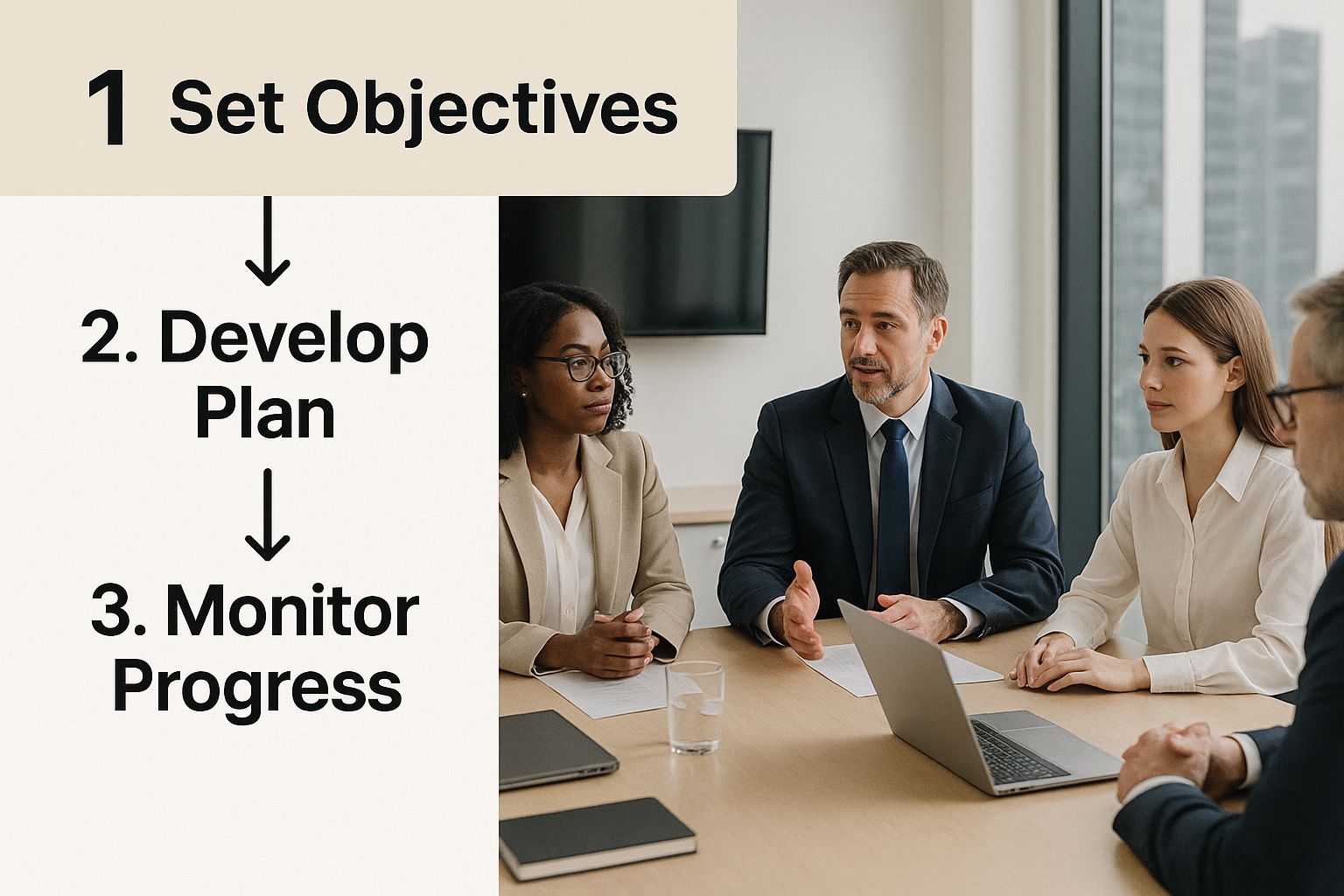
When you start with a clear "why," every dollar has a purpose. It stops you from throwing cash at random ideas and keeps your financial plan squarely on track.
Taming the Timeline Terror
Just as important as the money is the clock. The absolute best way to build a realistic timeline is to work backward from the event date. It’s a simple mental flip, but it’s a game-changer. Suddenly, you can see with perfect clarity when every single domino needs to fall.
Think of your event day as "Day Zero" and plot your key milestones in reverse. Let’s say your big day is October 31st:
- 1 Week Out (Oct 24): Lock in final headcount with the caterer and venue. No more changes!
- 1 Month Out (Sep 30): All vendor contracts signed, sealed, and delivered. Final A/V specs confirmed.
- 3 Months Out (Jul 31): Invitations are out the door. The promotional machine is officially switched on.
- 6 Months Out (Apr 30): Venue is secured. Keynote speakers are booked. Orders for custom items, like engraved awards or wood boxes, are placed.
This reverse-planning method is your secret weapon against last-minute chaos. It forces you to be real about lead times for everything from printing to vendor negotiations.
Pro Tip: Building a 10-15% contingency fund into your budget isn't just a good idea—it's essential. Think of it as your "uh-oh" fund. It's your safety net for surprise price hikes, that brilliant-but-costly idea you have a week before the event, or any of the other million things that can pop up.
Trust me, you'll need it. Managing costs is a huge headache for event planners. Budget constraints are a top challenge for 40% of planners, and the biggest culprits for overspending are often audio/visual (65%) and food and beverage (75%). With nearly 30% of planners also getting hit with unexpected vendor price increases, that contingency fund is your best friend.
By wrestling your budget and timeline into submission from the start, you’re not just planning an event—you're setting it up for a massive win. You're giving yourself the structure and foresight to handle anything that comes your way with total confidence.
Alright, let's get down to the fun part. The spreadsheets are done, the timeline is pinned to the wall, and now it’s time to actually build this thing. We're talking about creating the world your guests will step into, and that all starts with the venue and your hand-picked team of vendors. These aren’t just line items on a budget; they're the very soul of your event. They're what turns a plan on paper into an unforgettable experience.
Finding the right space isn't about scrolling through listings and just checking the capacity. You're looking for a place that does more than just hold people—it needs to echo your brand's message. And your vendors? They're not just hired hands. They're your partners in crime, the creative geniuses who will bring your vision to life, from the caterer designing the menu to the A/V crew dialing in the perfect mood lighting.
Finding a Venue with the Right Vibe
The venue sets the tone long before the first person walks through the door. A historic hotel whispers elegance and prestige, while a slick, industrial loft screams innovation and disruption. You have to think beyond the square footage and consider the entire guest journey. How easy is it to get there? Is parking a nightmare? What’s the neighborhood like for attendees coming in from out of town?
When you do a site visit, walk through it as if you were an attendee. Seriously, put on your "guest hat."
- Feel the Flow: How will people move around? Is there a natural path from registration to the main hall and breakout sessions, or are you creating traffic jams and awkward dead ends?
- Check the Bones: Ignore the current table setup and look at the fundamentals. Are there enough power outlets for charging stations? Is the Wi-Fi strong enough to handle a few hundred people logging on at once? Stand in the main hall and clap—what are the acoustics like?
- Picture Your Brand: Can you truly see your brand living in this space? Imagine your banners hanging from the rafters, your company colors washing the walls with light. Does it just feel right?
This is also where you can get clever with the budget. A huge cost-saving move I’ve seen work wonders is picking a venue in a second-tier city instead of a major metro area. You can save a massive chunk of change on the venue rental, and local vendors are often more willing to negotiate. This is just one of the smart budgeting tactics we're seeing pop up in the latest 2025 event planning trends.
Building Your Vendor Dream Team
Your vendors are the specialists who make the magic happen. Finding reliable people who just get your vision is absolutely critical. My first move is always to ask the venue manager for their preferred list or tap into my network for trusted recommendations. Before you sign anything, dive deep into their portfolios and read every testimonial you can find. You need to be sure their style clicks with yours.
When it's time to brief them, be ridiculously specific. Don't just tell a photographer you want "event photos." Give them a detailed shot list: "I need headshots of our CEO, candid shots of people networking during the cocktail hour, and wide-angle shots of the packed main stage during the keynote." Clarity is your best defense against disappointment on the big day.
Your vendor contract is your new best friend. It needs to spell out every single deliverable, the full payment schedule, and—most importantly—the cancellation policy. Never, ever, ever rely on a handshake deal. Get it all in writing.
This is non-negotiable, especially for your A/V team, caterer, and any entertainment. These are the elements that can truly make or break the entire attendee experience.
Juggling All the Moving Parts
Coordinating a dozen vendors can feel like trying to herd cats, but a master document is your secret weapon. Create a shared spreadsheet with every vendor's name, mobile number, arrival time, setup requirements, and their on-site point person. Give a copy to your entire team so everyone knows exactly who’s doing what and when.
This obsession with detail should extend to every single touchpoint, including what people take home with them. Let’s be honest, nobody wants another cheap pen. Thoughtful giveaways are what people remember. If you’re stuck for ideas, browsing some unique trade show giveaway ideas can get the creative juices flowing. Finding something that fits your brand and genuinely delights your guests turns a simple gift into a lasting memory.
Weaving Your Brand into Every Detail
Let's be honest: a corporate event is your brand’s big moment in the spotlight. It's where your company's story jumps off the screen and into the real world. This is your chance to create a living, breathing experience for everyone who attends—a far cry from just another email in their inbox. We're not talking about just sticking a logo on a napkin, but about crafting a consistent vibe that engages all the senses and sticks with people long after the lights go down.
Think of your brand as the golden thread running through the entire event, from the very first save-the-date to the parting gift they grab on their way out.
Get a Theme That Actually Tells a Story
Your theme is the soul of the event. It’s the creative glue that holds everything together, and it’s way more than just picking a couple of colors. You're telling a story here.
For example, a bank celebrating its 50th anniversary could go with a "Forging the Future" theme. Imagine sleek, modern decor, speakers talking about the next wave of finance, and interactive tech demos. On the flip side, a credit union all about its local ties might build an event around a "Homegrown & Thriving" theme, showcasing local food vendors, artists, and community heroes.
This theme needs to be everywhere, but subtly.
- Your Invites: The design and wording should be the first taste of the theme, getting people genuinely excited.
- The Venue Itself: Everything from the lighting and signage to the table centerpieces should whisper the same story.
- The Content: The topics for speakers and breakout sessions should all tie back to that central idea.
A strong theme becomes your gut check for every decision. When you're wondering about the music, the menu, or the swag, just ask: "Does this fit the theme?" If not, cut it. This is how you keep your event focused, cohesive, and memorable.
Create Branded Moments, Not Just Stuff
This is where the magic really happens. True brand integration is about the tangible things guests can see, touch, and even taste. It's about moving past the cheap, disposable junk and creating high-quality touchpoints that scream quality—just like your brand.
Think about the items people will actually interact with. Instead of a flimsy plastic cup, what about giving guests a high-quality, powder-coated tumbler with a subtle, elegant engraving? It’s not just a cup; it's a premium gift they'll use for months, keeping your brand right in their hands.
The same goes for recognizing your people. When you hand out an award, it needs to feel special. Custom-engraved corporate awards made from heavy, quality materials tell a recipient you value them far more than a generic plastic trophy ever could. You're creating something they'll be proud to show off.
It's About the Vibe, Not Just the Logo
Look, anyone can plaster a logo on a wall. But the most sophisticated branding is more subtle. The real goal is to create an environment that feels like your company, even when your logo isn't in sight. It's about letting your brand's values do the talking.
How do you turn values into an experience?
- If your brand is all about innovation, bring in some mind-blowing AV tech or let guests play with interactive product demos.
- If you’re known for world-class service, set up a concierge desk or create personalized agendas for every attendee.
- If sustainability is in your DNA, ditch the single-use plastics and make a point to highlight your eco-friendly choices.
This is the deeper level of branding that shows real confidence. It proves you know who you are. For brands that want to leave a seriously classy impression, exploring the world of laser logo engraving on premium items can be a complete game-changer, adding a touch of elegance that simple printing can't touch.
By weaving your brand into every thoughtful detail, you’re doing more than just hosting an event—you’re building a powerful, lasting memory.
Making the Magic Happen: Flawless Execution and Follow-Up
The big day is here. After all the spreadsheets, phone calls, and late nights, it’s finally showtime. This is the moment your blueprint comes to life, and it's where a good event becomes an unforgettable one. Seamless on-site execution is all about controlling what you can and having a plan for the beautiful chaos you can’t.
First things first: forget winging it. A flawless event runs on a ridiculously detailed "run-of-show" document. This isn't just a simple agenda; it's the event's holy scripture, timed down to the minute. It maps out everything from when the A/V team starts their sound check to the exact moment the closing remarks begin. Every single person on your crew—from the volunteer at the registration desk to the person cuing the keynote—needs this in their hands.
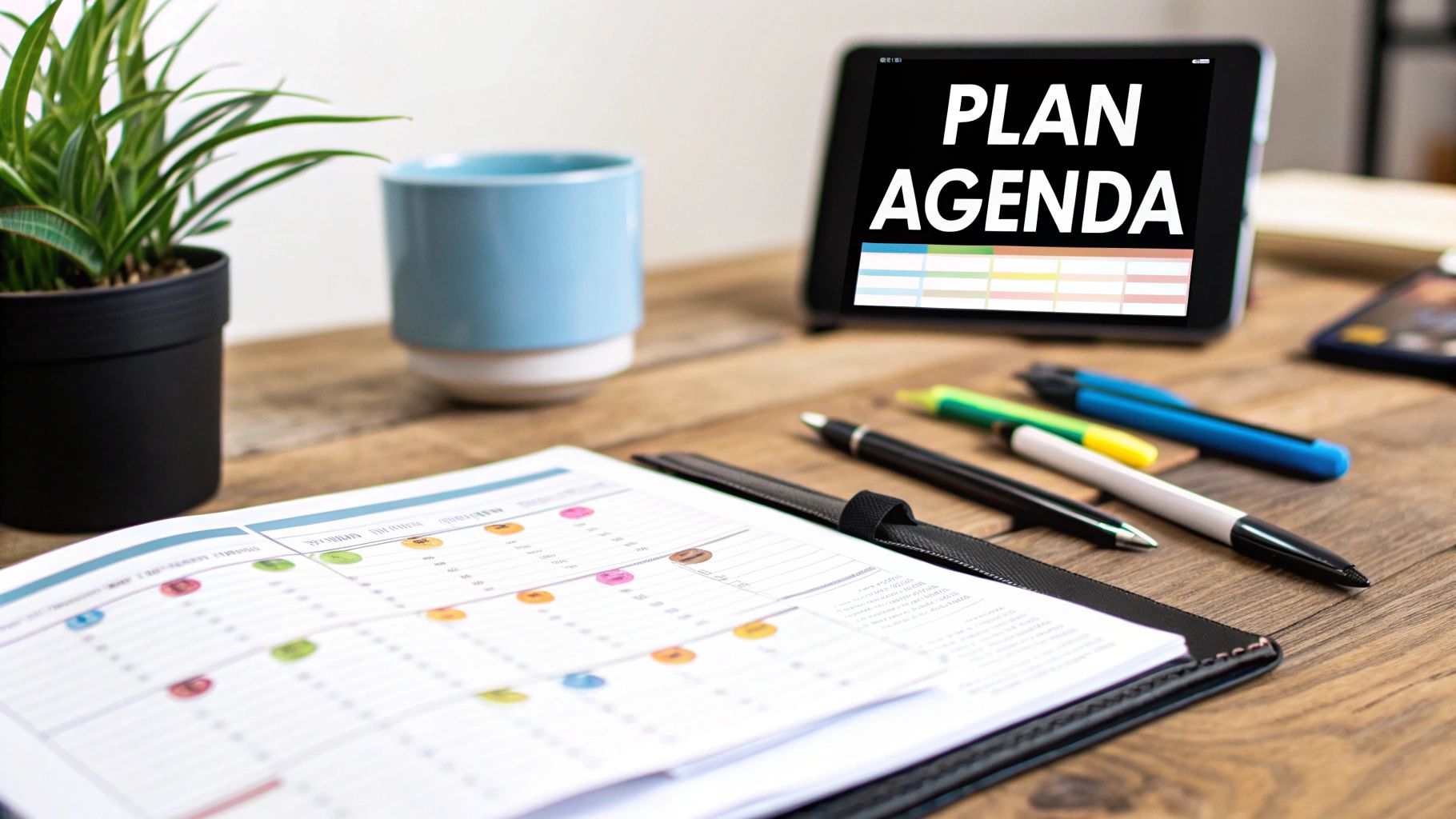
When everyone knows their role and the timeline, they can act with confidence. It’s about empowering your team to own their zones without having to track you down for every little question.
The All-Important Pre-Event Huddle
About an hour before the doors swing open, pull everyone together. This final huddle with your team and key vendors is probably the most important meeting you'll have all day. This isn't the time for big, sweeping changes—it’s about getting everyone on the same page and amping up the energy.
Quickly run through the schedule, calling out the most critical moments. More importantly, talk through the "what-ifs." What's our move if a keynote speaker gets stuck in traffic? Who's the point person for a sudden Wi-Fi outage? Having these answers locked and loaded turns a potential crisis into a minor blip on the radar.
Think of this pre-event briefing as your command center moment. It’s where you sync the entire team, clarify roles under pressure, and set a calm, confident tone for the day. Everyone knows the game plan and is ready to nail it.
Part of being a seasoned pro is anticipating the common hiccups. I always have a small troubleshooting kit on hand—both a literal one with gaffer tape and extra chargers, and a digital one with backup presentations on a USB stick. You’ll thank yourself later.
The Follow-Up: Don't Drop the Ball After the Last Handshake
Just because the last guest has walked out the door doesn't mean your job is done. In many ways, the most valuable part of your event is just getting started. Your post-event follow-up is where you solidify new relationships, gather incredible insights, and actually prove the event's ROI. Whatever you do, don't let that post-event buzz fizzle out.
Your follow-up should be as thoughtfully planned as the event itself. The key is to act fast. Get a thank-you email out to all attendees within 24 hours. Make it feel personal, maybe mention a specific highlight, and always, always include a link to a short feedback survey.
Honest feedback is pure gold. Ask pointed questions that link directly back to the goals you set in the very beginning.
- On a scale of 1-10, how valuable did you find the keynote presentation?
- Did the networking session lead to any meaningful connections for you?
- What was the single best part of the event? What could we do even better next year?
This is the data that proves your event hit the mark.
Measuring What Matters and Nurturing New Leads
Once the survey responses start rolling in, it's time to dig into the hard metrics. Check out the social media chatter, look for any press coverage, and if lead generation was a goal, keep a close eye on the sales pipeline. This is how you draw a straight line from your event budget to real business results.
This is also a prime opportunity to leave a lasting impression. A personalized note to speakers, sponsors, or VIP guests can go a long way. For internal events, taking a moment to recognize the employees who were instrumental in pulling it off is a massive morale booster. If you need some fresh ideas, our guide on employee recognition gift ideas offers some fantastic suggestions that are more meaningful than a generic email.
By nailing both the on-site execution and the post-event strategy, you bring the entire process full circle. You don't just create a memorable day; you deliver an experience with a measurable, lasting impact.
Got Questions? We’ve Got Answers.
Alright, so you’ve got your master plan, the budget is approved (mostly), and you’ve even picked a theme that doesn’t involve a toga party. Fantastic. But even the most buttoned-up event plan has a way of throwing you a curveball.
Let's dive into some of the most common questions that pop up, whether you're planning your first team lunch or your tenth annual conference. Think of this as your secret weapon for handling those "uh-oh" moments like a seasoned pro.
Seriously, How Early Do I Need to Start Planning This Thing?
Ah, the million-dollar question. The honest answer? Probably earlier than you think. Procrastination is the sworn enemy of a great event, leading to sad, picked-over venues and last-minute vendor fees that will make your finance department weep.
Your ideal timeline really hinges on the size and complexity of your event.
-
The Big Kahuna (Conferences, Galas, etc.): For anything with 200+ guests, you need to be thinking 9-12 months out. No joke. This gives you first dibs on the best venues and lets you snag those in-demand keynote speakers before their calendars fill up for the next decade.
-
The Sweet Spot (Client Dinners, Company Off-sites): Planning an event for 50-200 people? A 4-6 month runway is your happy place. It’s enough time to wrangle all your vendors and make thoughtful decisions without that constant, heart-pounding sense of panic.
-
The Quick Win (Workshops, Team Trainings): If you're coordinating a smaller internal get-together, you can often pull it off in just 1-3 months.
When in doubt, add a few extra weeks to your timeline. You'll thank yourself later.
What Are the Classic Blunders I Should Avoid?
Let's learn from the mistakes of others, shall we? It's far less painful. Here are the biggest rookie (and sometimes, veteran) mistakes that can derail an otherwise great corporate event.
-
Planning Without a "Why": This is the cardinal sin. An event without a clear purpose is just an expensive party. Are you trying to generate leads? Celebrate a win? Educate your team? If you don't know, your attendees won't either.
-
The Non-Existent "Oops" Fund: Things will go wrong. A/V will suddenly need an extra cable that costs a fortune, or you'll need 20 more vegetarian meals at the last minute. Build a 10-15% contingency buffer into your budget from day one. It’s not optional.
-
Radio Silence: Assuming everyone—your vendors, your speakers, your internal team—knows what's happening is a recipe for disaster. Over-communicate. Then communicate some more. A well-informed team is a smooth-running team.
-
Forgetting the Finish Line: The event isn’t over when the lights go out. The real magic happens in the follow-up. Skipping this step means you're leaving valuable feedback, new leads, and crucial ROI data on the table.
Here's a pro tip: Don't get so lost in the logistics—the floor plans, the schedules, the name tags—that you forget to design an experience. An event should make people feel something. It's about creating a memory, not just filling a room.
How Do I Actually Get People to Show Up?
You can plan the most incredible event in history, but it doesn't mean a thing if you're speaking to an empty room. Getting butts in seats requires a smart promotional strategy.
Start by sending a "save the date" email about 3-4 months ahead of time. It’s a simple, low-effort way to get on people's calendars before they're booked.
Then, lean into professional platforms like LinkedIn. Don't just post a link; create a narrative. Tease your speaker lineup, share behind-the-scenes photos of the venue, and post sneak peeks of the agenda. Build a simple, clean landing page where registration takes 60 seconds, not 15 minutes.
And for your most important guests—think key clients from a local bank, a top-tier credit union, or even faculty from a school like Creighton University—don't just send a generic email. A personal invitation, maybe even a phone call, from a senior leader can make all the difference. It shows you truly value their presence.
What’s the Best Way to Prove This Was All Worth It?
Ah, the dreaded ROI question. The good news is, measuring your event's success is totally doable—as long as you tie it back to the "why" you established at the very beginning.
If your goal was lead generation, your victory metric is simple: how many qualified leads did you capture? Track their journey and see how many convert into actual business over the next six months.
Was it a brand awareness play? Time to look at the data. Monitor social media mentions using the event hashtag, look for press coverage, and check for a spike in website traffic during and after the event.
For an internal event focused on boosting team morale, a post-event survey is your best friend. Ask direct questions about engagement, satisfaction, and whether they found it valuable. The proof, as they say, is in the pudding—or in this case, the data.
Ready to elevate your next event with unforgettable, high-quality touches? At 4ULaserWorks, we specialize in creating custom laser-engraved corporate awards, promotional gifts, and personalized drinkware that leave a lasting impression. As a BBB-accredited business officially licensed with Creighton University, we're the trusted partner for corporations, schools, and event planners who demand excellence. Discover how our personalized service can bring your brand to life.
