


When it comes to the best water bottles for hiking, you’re generally looking at two camps: the tough-as-nails, insulated stainless steel models like those from Polar Camel, or the feather-light, BPA-free plastic bottles for hikers who count every single ounce. The right choice for you comes down to a classic trail trade-off: durability, weight, insulation, and capacity.
Your Most Essential Piece of Hiking Gear
Let's be real for a second. Picking the best water bottle for hiking isn't just about hauling H₂O up a mountain. It’s about finding a trusty sidekick for your adventures. The right one keeps you safe and makes the whole experience better. The wrong one? It's a genuine drag, literally and figuratively.
There’s no single "perfect" bottle for everyone. It's a lot like picking hiking boots—what's great for a sunny stroll in the park will absolutely fail you on a rugged mountain trek. This guide is here to walk you through the big decisions you need to make.
Finding Your Perfect Trail Companion
Choosing your bottle means you've got to weigh a few key factors. Are you Team Stainless Steel, built to survive anything, or Team Plastic, keeping your pack as light as possible? Is having ice-cold water at the summit worth the extra weight of insulation? And the million-dollar question: how much water do you actually need?
- Material Matters: The classic showdown is stainless steel versus plastic. It’s a constant battle between bombproof durability and shedding precious ounces.
- Insulation Impact: An insulated bottle can be a total game-changer, serving up refreshingly cold water on a sweltering day. To see who really stands out, check out our guide on the best insulated water bottle brands.
- Capacity Planning: Nailing the right bottle size for your hike’s length and intensity is critical. You want enough water to stay hydrated, but not so much that you feel like you're carrying a boulder.
This chart really puts the weight difference into perspective for a standard 32oz bottle.
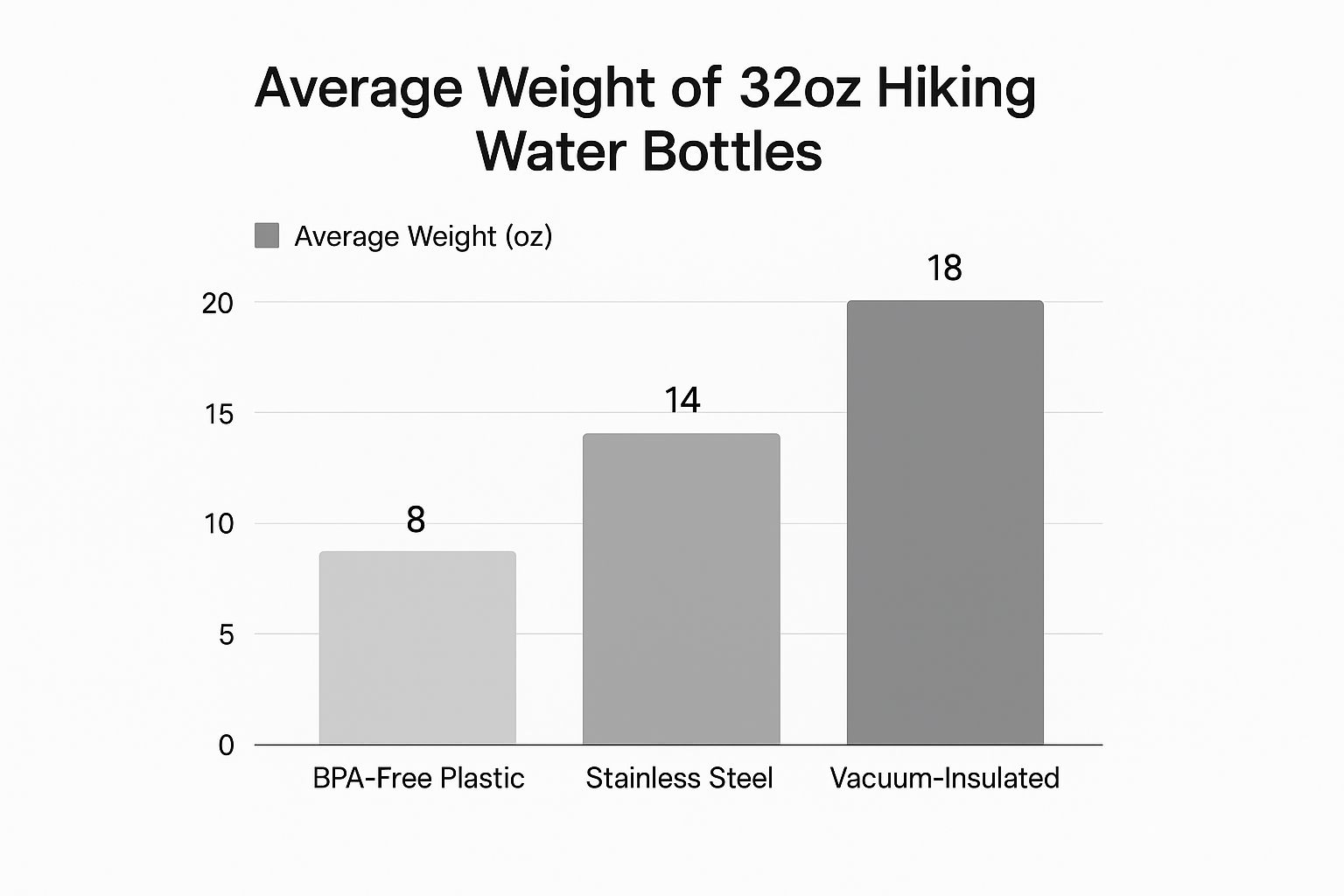
As you can see, that glorious vacuum insulation adds a noticeable heft compared to a basic plastic bottle. For long-distance thru-hikers, that's a huge deal.
This whole conversation is part of a massive global shift. The reusable water bottle market is on track to explode, projected to hit over $12 billion by 2025. It's all thanks to people like us getting smarter about the environment and ditching single-use plastics. You can discover more insights about this market growth on intellectualmarketinsights.com.
At the end of the day, it all boils down to your personal hiking style. As you mull it over, it's worth checking out the diverse range of sport bottle designs out there; they can spark some great ideas about innovative features and materials. By the time you finish this guide, you’ll have the know-how to pick the perfect hydration partner for your next adventure.
Steel vs. Plastic: The Great Bottle Material Debate
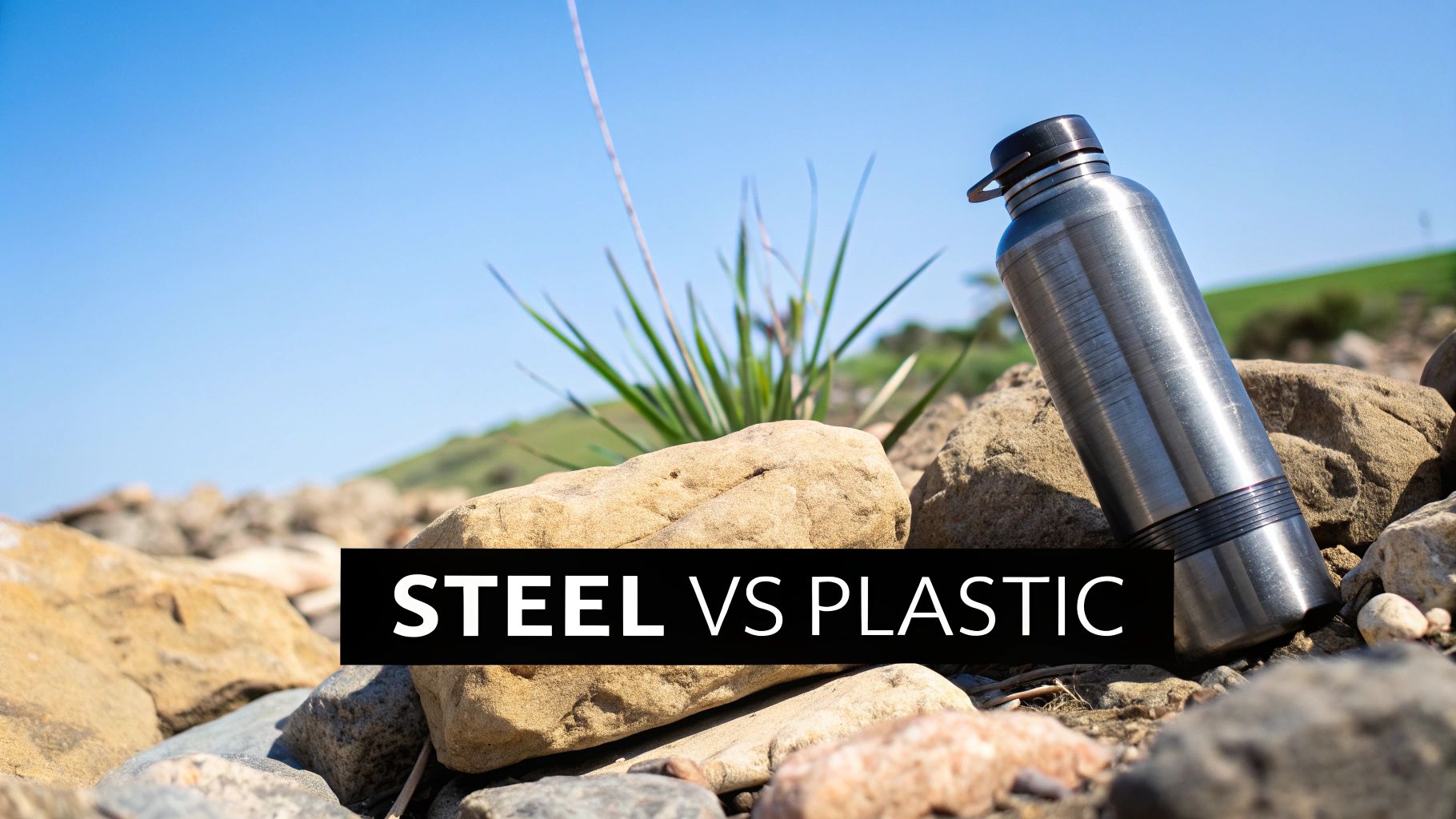
Let's be real: your gear is going to get beat up on the trail. That's why the choice between tough-as-nails stainless steel and lightweight modern plastic is one of the biggest decisions you'll make for your hiking setup. This isn't just about style; it’s a strategic move that dictates how heavy your pack feels and whether your water stays cold.
Think of it like picking armor for your hydration. Stainless steel is the full-plate, ready-for-battle knight—nearly indestructible. On the other hand, a modern plastic like Tritan is more like flexible chainmail, giving you great protection without all the heft.
The Case for Stainless Steel
When it comes to pure, unadulterated toughness, stainless steel is king. These bottles can take a beating. Dropped on rocks? Tossed in a pack? No problem. They're built for adventurers who play hard and expect their gear to keep up, season after season.
Another huge win for steel is that it doesn't hold onto flavors. The taste of last week's electrolyte mix won't crash the party when you just want crisp, clean water. Plus, with an insulated steel bottle, you get the game-changing luxury of ice-cold water on a scorching day or a hot drink on a frosty morning.
The big trade-off? Weight. Every single ounce counts when you're hoofing it up a mountain, and steel bottles are noticeably heavier. For the ultralight crowd, this alone can be a deal-breaker.
The Lightweight Champion: Plastic
Modern BPA-free plastics, especially Tritan, are famous for one thing: being incredibly light. This is a massive advantage for anyone who obsesses over pack weight, from thru-hikers tackling the Appalachian Trail to casual day-trippers who just want an easier climb.
Plastic bottles also come in a dizzying array of shapes and sizes, so finding the perfect fit for your pack's side pocket is a breeze. And while they might not be as bombproof as steel, high-quality plastic bottles are surprisingly resilient and can handle plenty of trail abuse.
Let's be honest, the cost and weight savings are why plastic reusable bottles still command a huge 34.6% share of the global market. You can check out the full market analysis on Coherent Market Insights to see just how popular they are.
Material Showdown: Stainless Steel vs. BPA-Free Plastic
So, how do they stack up head-to-head? Let’s break it down.
| Feature | Stainless Steel | BPA-Free Plastic (Tritan) |
|---|---|---|
| Durability | Excellent. Resists dents, scratches, and drops. | Good. Shatter-resistant but can be punctured. |
| Weight | Heavy. A significant factor for ultralight hikers. | Very light. The top choice for minimizing pack weight. |
| Insulation | Excellent (in double-walled models) for hot & cold. | Poor. Does not retain temperature well. |
| Flavor Retention | None. Doesn't hold onto tastes or odors. | Low. Can sometimes retain strong flavors. |
| Cost | Higher upfront cost but lasts for years. | More affordable and budget-friendly. |
Ultimately, the best material really boils down to your personal hiking style. If you’re a weekend warrior who treasures a light pack, a tough plastic bottle is a brilliant pick. If you need something smaller for shorter trips, our guide on the best 20 oz bottles for everyday adventures might be just what you need.
But if you’re notoriously hard on your equipment and crave that perfectly chilled sip at the summit, the sheer resilience of stainless steel is pretty hard to argue with.
The All-Season Magic of an Insulated Bottle
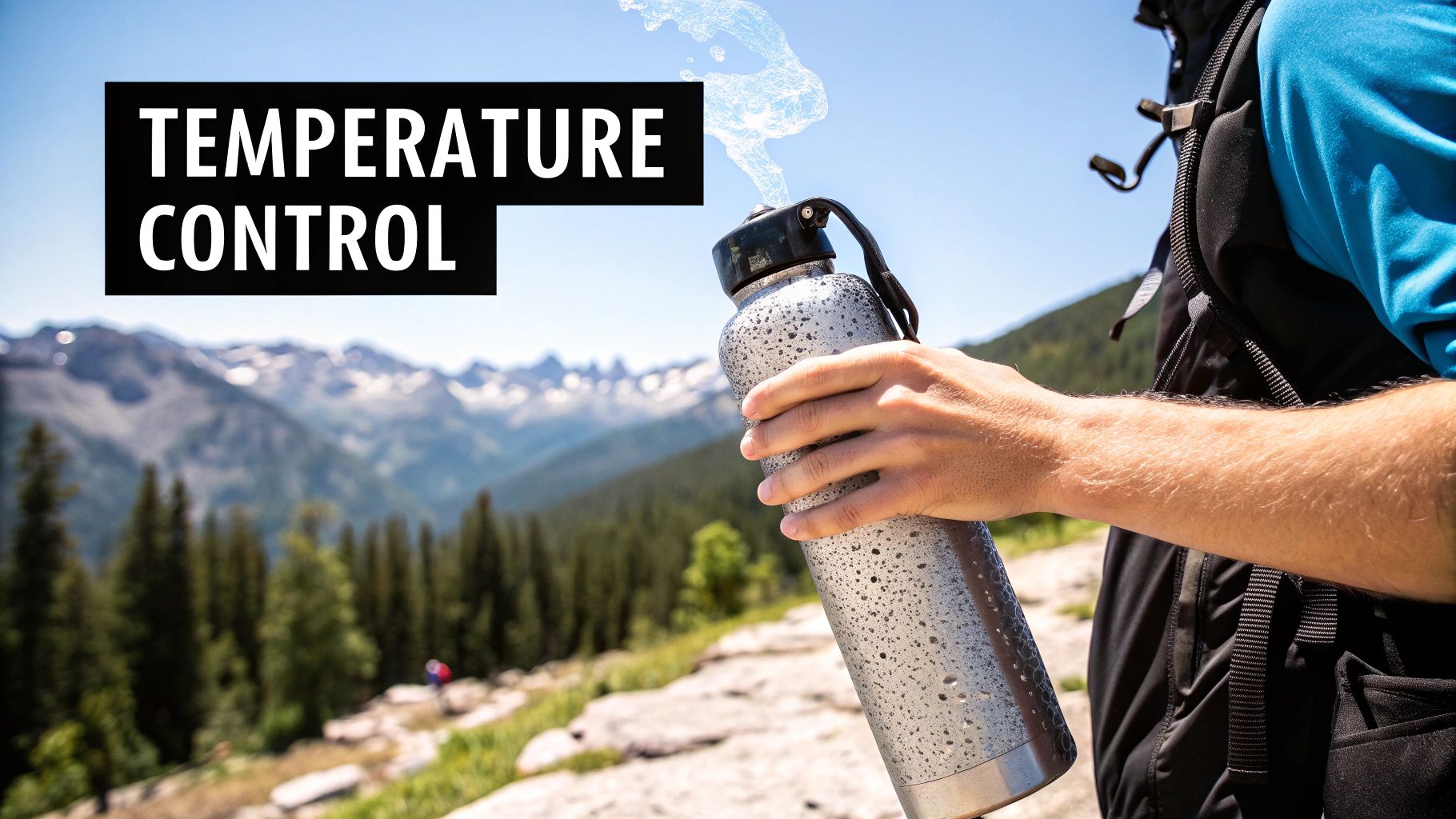
Let's paint a picture. You've just scrambled up a dusty, sun-baked trail to the summit. Your reward? A long, glorious gulp of water that's still genuinely ice-cold. Or maybe it's the dead of winter, and you pause mid-hike to pour a blast of steaming hot tea that warms you from the inside out.
That’s not a trail fantasy. That’s the game-changing power of a good insulated bottle.
The secret sauce is double-wall vacuum insulation. It sounds techy, but it’s pretty simple. Imagine a bottle inside a bottle, with a pocket of nothing—a vacuum—sandwiched between them. This empty space is a terrible conductor of heat, creating a thermal forcefield around your drink.
So, the summer heat can’t get in to warm up your water, and the winter chill can’t sneak in to cool down your coffee. It’s a simple piece of engineering that turns a basic water bottle into a serious piece of comfort-boosting gear.
Is Insulation Worth the Weight?
Now for the big question: should you always carry an insulated bottle? Honestly, no. It all boils down to that classic hiker's dilemma: comfort versus weight. Insulated bottles are beefier and heavier than their single-wall cousins, so you have to decide if that temperature control is worth carrying the extra ounces.
Here’s when an insulated bottle really earns its keep:
- Hot Weather Hikes: Trudging through an exposed canyon or up a sunny mountain? That cold sip of water isn't just nice, it's a huge morale booster and a key to staying safe.
- Cold Weather Adventures: On a snowy trail or a frosty morning, a hot drink is pure gold. It can help keep your core temperature up and give you that psychological lift when you need it most.
- Dawn-to-Dusk Days: If you're out for the long haul, an insulated bottle guarantees your drink is just as good at 4 PM as it was at 8 AM.
On the other hand, if you're just nipping out for a quick two-hour loop on a perfect 70-degree day, a lighter, non-insulated bottle is probably the smarter choice.
And we're not the only ones who think so. The market for insulated bottles is projected to hit a whopping $988 million by 2025. Why? Because hikers and adventurers are demanding gear that performs. Stainless steel versions are at the front of the pack, offering that perfect mix of toughness and temperature-holding power.
At the end of the day, it's your call. But if you've decided temperature control is a must-have, it's worth exploring the best insulated water bottles for every season to find your perfect match. A few extra ounces is a tiny price to pay for a perfectly chilled drink on a scorching day or a soul-warming coffee in the biting cold.
Calculating Your Trail Hydration Needs
How much water is enough? It's the million-dollar question every hiker asks before lacing up their boots, and the answer is never "one size fits all." Forget those generic, blanket statements. Figuring out your real hydration needs is a delicate dance between staying safe and not turning your backpack into a sloshing, 20-pound anchor.
Think of it like packing for a trip. You wouldn’t stuff a ski parka into your suitcase for a Hawaiian vacation, right? The same logic applies here. You need the right amount of water for the journey ahead, because lugging around an extra five pounds of H₂O is almost as frustrating as running out.
The Rule of Thumb and When to Break It
A fantastic starting point for most hikers is the classic guideline: carry about half a liter (or 16 ounces) of water for every hour of hiking. This is a solid baseline for a pleasant day on a moderate trail. But that's all it is—a baseline. The trail, the weather, and your own body will always demand you tweak that formula.
- Trail Difficulty: A leisurely stroll on a flat, shaded path is a world away from a grueling uphill slog with serious elevation gain. The more you sweat, the more you need to drink. It's that simple.
- Climate and Temperature: Hiking in the dry desert heat of Arizona is a completely different animal than a cool, misty morning in the Pacific Northwest. Hot, humid, or windy conditions can double your water needs in a heartbeat.
- Personal Fitness: Your body's own engine—your metabolism and fitness level—plays a massive role. The only way to learn this is to get out there and pay close attention to what your body is telling you.
Staying properly hydrated isn't just about quenching thirst; it's a non-negotiable safety essential. Dehydration leads to fatigue, dizziness, and bad decisions on the trail. Nailing your water estimate before you leave is one of the smartest things you can do.
Matching Bottle Capacity to Your Hike
Once you've got a rough estimate, you can match it to the perfect bottle capacity. A standard 32 oz (or one liter) bottle is often the sweet spot for a half-day loop, giving you enough water for a solid 2-4 hour hike in normal conditions.
But what about that all-day epic or a multi-day backpacking trip? A single bottle just won’t cut it. This is where you graduate to a larger hydration system, often pairing a bigger bottle with a trustworthy water filter. This strategy is a game-changer: you carry less weight from the get-go and can safely refill from streams and lakes along the way. Now you're hiking smart, not heavy.
Smart Features That Make a Real Difference
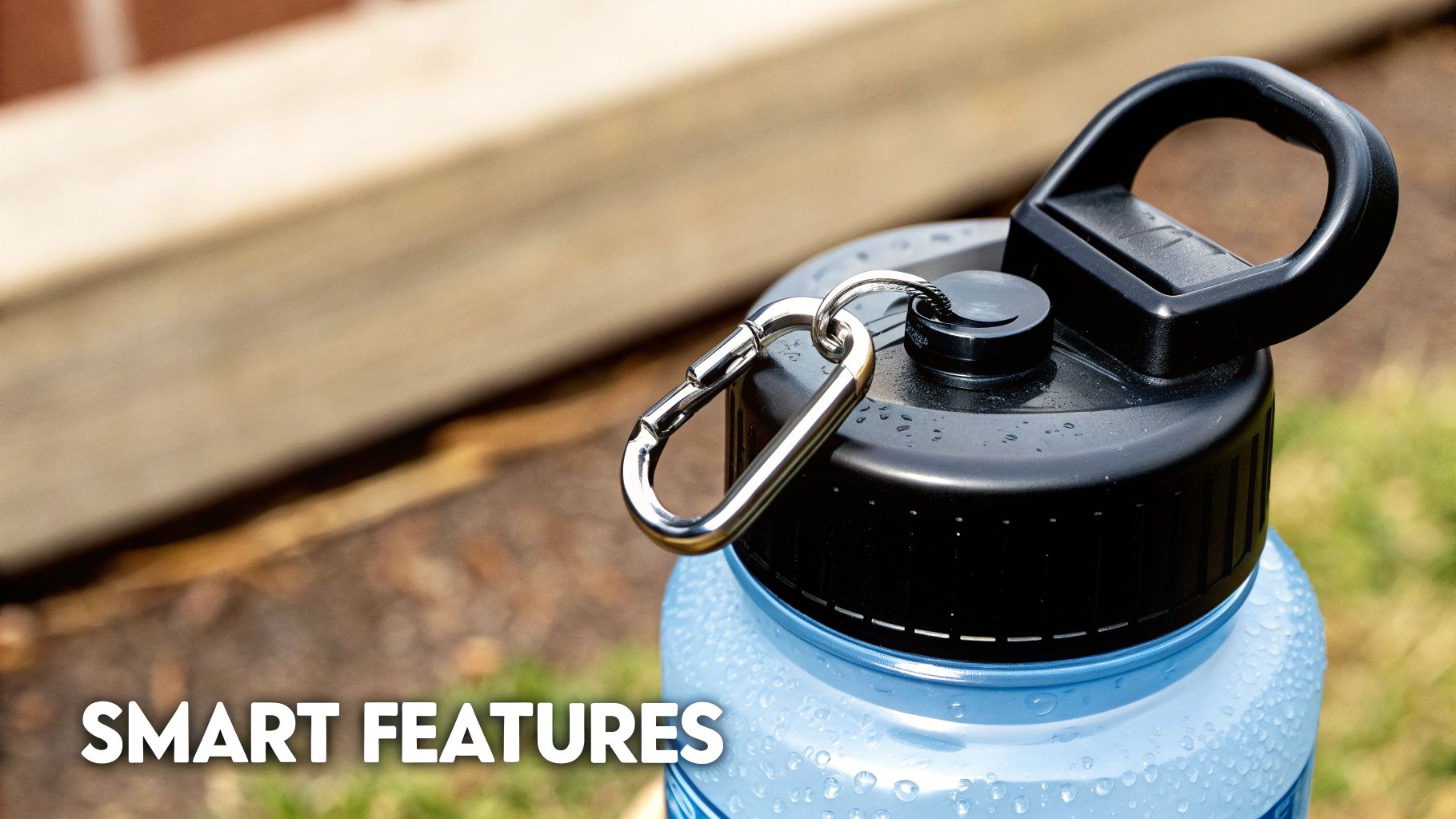
Let's be honest, the line between a decent water bottle and a truly great one is all in the details. We're not just talking about something to hold water; we're talking about a piece of gear. The little things that barely register at home can become your best friend—or your worst enemy—when you're ten miles deep in the backcountry.
Take the lid, for example. A wide-mouth lid is a champ for scooping water out of a creek or cramming ice cubes in before you head out. But try taking a sip while scrambling over rocks, and you’re basically guaranteed a face full of water. That's when a spout lid or a straw lid becomes the unsung hero, letting you hydrate on the move without giving yourself an impromptu shower.
Trail-Ready Design Elements
Beyond the lid, a few other design choices really separate the trail-worthy bottles from the pretenders. These are the thoughtful touches you’ll thank the designers for when your hands are numb or your pack is stuffed to the gills.
- Sturdy Carry Loops: A weak little plastic loop is just asking to snap, sending your precious water supply tumbling down a ravine. You want a beefy, integrated loop you can trust to clip onto a carabiner and swing around all day long.
- Pack-Friendly Shape: A slim, streamlined bottle is your best friend—it slides right into your pack’s side pocket without a fight. Those weirdly shaped, bulky bottles? They’re a packing nightmare.
- Glove-Friendly Operation: Ever tried to unscrew a tiny, slick lid with thick gloves on? It's maddening. A bottle you can easily open in cold weather is a massive win, saving your fingers from the biting wind just to get a drink.
The real game-changer? Compatibility. The smartest bottles are designed to play well with other gear, especially water filters. A bottle that screws directly onto a Sawyer Squeeze or a Katadyn BeFree filter is pure gold. It saves time, hassle, and the need to carry extra gear.
Must-Have Accessories
Even the most amazing bottle can get an upgrade. A long, flexible cleaning brush is absolutely essential for scrubbing out that funky trail gunk that inevitably builds up. I’m also a huge fan of a silicone protective boot. It saves your bottle from dings, adds some much-needed grip, and—best of all—gets rid of that ear-splitting CLANG! every time you set it down on a rock.
At the end of the day, these features aren’t just sales gimmicks. They’re smart, practical design choices that make your time on the trail smoother, safer, and a whole lot more fun. They turn a simple container into a reliable partner for any adventure.
Make It Yours with Custom Engraving
https://www.youtube.com/embed/zyvfV9ZC1RU
Your water bottle is more than just a piece of gear. It’s your trusty sidekick on every dusty switchback and rocky summit. It’s there for the chilly sunrises, the grueling uphill slogs, and the jaw-dropping views that make it all worthwhile.
So, why should it look like every other generic bottle on the shelf? Let's turn that functional tool into a personal trophy that screams you.
Here at 4ULaserWorks, we specialize in custom laser engraving on powder-coated tumblers, personalized drinkware, and more. Forget those flimsy stickers that peel, fade, or get scraped to bits after one decent scramble. We use precision laser engraving to permanently etch your vision onto a tough, powder-coated bottle.
High-Quality Engraving for a Lifetime of Adventures
Our whole process is built around permanence and insane detail. The laser cleanly vaporizes the powder coating to reveal the shiny stainless steel beneath. The result? A sharp, brilliant design that will last as long as the bottle itself.
It’s the same bulletproof method we use for all kinds of clients who demand the best, including corporate clients, credit unions, banks, schools, sports teams, and event planners. With officially licensed products for Creighton University and a history of creating stunning corporate awards and promotional gifts, we bring professional-grade quality to your personal gear. Want to see just how good it can look? Check out our guide to customizing with laser engraved tumblers.
Your gear should be as unique as your journey. A custom-engraved bottle is more than just a container; it's a testament to your passion for the trail—a piece of art that’s tough enough for any adventure.
As a BBB Accredited business known for high-quality engraving and personalized service, we've built a reputation you can count on. We pour that exact same level of care into your personal hiking bottle, making sure it perfectly captures your story.
Honestly, why carry a boring bottle when you can carry a masterpiece?
Your Top Hiking Bottle Questions, Answered
Alright, you've got the basics down, but a few questions always seem to pop up right when you're about to click "buy." Let's clear the air on some of the most common head-scratchers so you can choose your gear with total confidence.
How Do I Keep My Bottle From Getting… Funky?
We've all been there. You open your bottle and get a whiff of something that definitely wasn't there last hike. Preventing that dreaded moldy taste is simple, but you have to be diligent.
After every trip, take the whole thing apart—yes, even the little seals in the lid. A good scrub with hot, soapy water and a bottle brush is your first line of defense.
For a serious deep clean, let it soak in a mix of one part white vinegar and four parts water. Got a stubborn coffee or sports drink smell? A paste of baking soda and water left to sit inside for a bit works like a charm. The absolute golden rule? Let every single piece air dry completely before you even think about putting it back together.
The Big Debate: Stainless Steel or Plastic?
This really boils down to what you value most out on the trail. Stainless steel is the undisputed king of toughness. You can drop it, bang it against rocks, and it'll just get a few character marks. Plus, it never holds onto the flavor of yesterday's lemonade, and an insulated steel bottle is your best friend for icy-cold water or hot tea.
On the flip side, quality BPA-free plastic is way, way lighter. When you're counting every single ounce for a long trek, that weight savings is huge. So, if a featherlight pack is your ultimate goal, plastic is a fantastic choice. If you demand bombproof durability and perfect temperature control, steel is the hands-down winner. For a deeper dive, you can explore these additional top picks for the best water bottles for hiking to see even more options.
What's the Right Size for a Day Hike?
For your average 2-4 hour hike on a pleasant day, a 32 oz (1 liter) bottle is a great place to start.
But think of that as a baseline, not a rule. If you're heading out in the sweltering heat or tackling a steep, sun-blasted trail, plan on chugging about 16 oz (half a liter) every hour. When it comes to water, it is always, always better to end the hike with a little extra than to run out a mile from the car.
Ready to gear up with a bottle that truly belongs to you? At 4ULaserWorks, we turn great gear into personal treasures with permanent, high-quality laser engraving. Design your custom bottle today!
